Free delivery on orders over $300
Same-day shipping available
Order before 11AM for same-day dispatch
Free delivery on orders over $300
Same-day shipping available
Order before 11AM for same-day dispatch
Free delivery on orders over $300
Same-day shipping available
Order before 11AM for same-day dispatch
Free delivery on orders over $300
Same-day shipping available
Order before 11AM for same-day dispatch
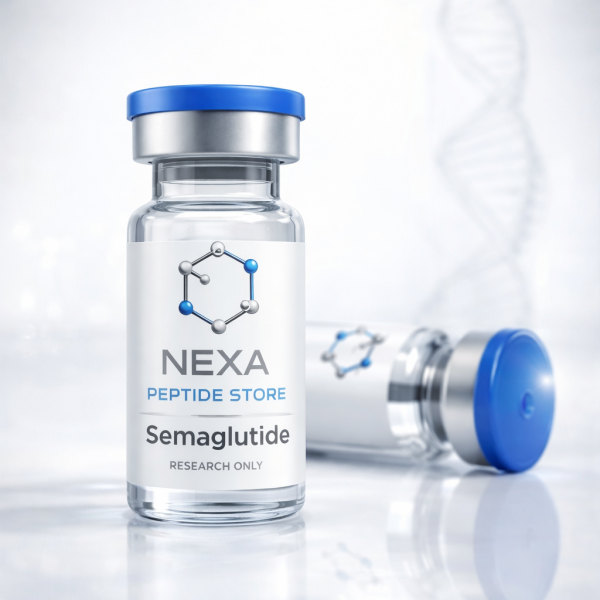
Research Use Only. Semaglutide as sold on this page is a laboratory research chemical, not a drug, dietary supplement, or cosmetic. It is not FDA-approved, has not been evaluated for safety or efficacy by any regulatory body in this form, and is not intended for human or animal use, consumption, diagnosis, treatment, cure, or prevention of any disease or condition.
Semaglutide is a synthetic peptide (CAS 910463-68-2) that functions as a GLP-1 receptor agonist, engineered from the sequence of native human GLP-1 for extended metabolic stability. In pharmaceutical form, semaglutide is FDA-approved and marketed as Ozempic, Wegovy, and Rybelsus. The semaglutide sold here is a separate, non-pharmaceutical-grade research compound supplied strictly for in-vitro laboratory use — not the approved drug product, and not for human administration.
If you’ve priced out research-grade GLP-1 compounds anywhere online, you already know the market is a mess. Prices for “semaglutide” swing by 10x between vendors, COAs are frequently recycled templates, and more than a few listings quietly substitute a salt form semaglutide sodium or semaglutide acetate without saying so anywhere on the page. The FDA itself has said plainly that it “does not have information on whether these salts have the same chemical and pharmacologic properties as the active ingredient in the approved drug.” That’s not a footnote. That’s the whole reason batch-specific, mass-spec-verified COAs matter more for this compound than almost anything else in a research freezer.
Semaglutide Research Overview
What Is Semaglutide?
Semaglutide is a 31-amino-acid synthetic peptide sharing roughly 94% sequence homology with native human glucagon-like peptide-1 (GLP-1), modified with amino acid substitutions and an albumin-binding fatty-acid side chain that extend its plasma half-life relative to endogenous GLP-1. It carries the CAS registry number 910463-68-2, a molecular formula of C187H291N45O59, and a molecular weight of approximately 4,113.6 g/mol (PubChem CID 56843331).
Mechanistically, semaglutide is classified as a GLP-1 receptor agonist, or incretin mimetic — a compound studied for its interaction with the GLP-1 receptor rather than for any claimed effect in humans. Semantic and formulation variants researchers encounter in the literature and on vendor sites include semaglutide acetate, semaglutide sodium, and simply “GLP-1 RA” these are not interchangeable with the base compound, and a COA that doesn’t specify which form is being tested is incomplete.
What Current Research Shows
Semaglutide’s receptor pharmacology has been characterized extensively in preclinical and pharmacological literature. A 2022 narrative review in Pharmaceutical Research summarized the mechanistic case: GLP-1 receptor activation has been studied in models for its role in potentiating glucose-dependent insulin secretion, suppressing glucagon secretion, delaying gastric emptying, and supporting beta-cell function, alongside central nervous system pathways in hypothalamic and brainstem nuclei studied for effects on satiety signaling and energy homeostasis (Mahapatra et al., Pharmaceutical Research, June 2022). The same review catalogs preclinical investigation into hepatic lipid handling and neuroprotective pathways, including reduced oxidative stress and inflammatory markers observed in animal models of neurodegenerative disease.
It’s worth being precise about what that research actually covers. Those mechanistic findings come from study of the GLP-1 receptor agonist class broadly and the pharmaceutical-grade molecule specifically — not from any study of unregulated, non-pharmaceutical-grade research compound sold outside the approved supply chain. Separately, the FDA-approved pharmaceutical formulation of semaglutide has been evaluated in controlled human trials: the OASIS 4 trial, published in the New England Journal of Medicine in September 2025, reported a mean body-weight change of −13.6% with oral semaglutide 25 mg versus −2.2% with placebo over 64 weeks in adults with overweight or obesity (Wharton et al., NEJM, September 17, 2025). That trial studied the approved drug product administered under medical supervision — a materially different thing from the unapproved research compound described on this page, which is not studied, dosed, or intended for that use.
Semaglutide Specifications & Comparison
Property
Semaglutide
Tirzepatide
Retatrutide
CAS Number
910463-68-2
2023788-19-2
2381089-83-2
Molecular Formula
C187H291N45O59
C225H348N48O68
C221H342N46O68
Molecular Weight
~4,113.6 g/mol
~4,813.5 g/mol
~4,731.3 g/mol
Receptor Target(s) Studied
GLP-1 receptor (single agonist)
GIP + GLP-1 receptors (dual agonist)
GIP + GLP-1 + glucagon receptors (triple agonist)
Storage (lyophilized)
-20°C, protected from light/moisture
-20°C, protected from light/moisture
-20°C, protected from light/moisture
Batch Testing Method
HPLC + mass spectrometry
HPLC + mass spectrometry
HPLC + mass spectrometry
Typical COA-Reported Purity
≥98%
≥98%
≥98%
Tirzepatide’s dual-receptor mechanism and retatrutide’s triple-receptor mechanism are structurally and pharmacologically distinct from semaglutide’s single-receptor GLP-1 activity — researchers comparing the three should treat them as related but non-interchangeable compounds, each requiring its own COA and identity verification. Related research listings: Tirzepatide and Retatrutide.
Purity, COA, and Third-Party Testing Standards
Every batch of semaglutide we list ships with a batch-specific Certificate of Analysis from independent third-party testing, reporting HPLC purity and mass-spectrometry identity confirmation against the expected molecular weight and formula — not a template document recycled across lots.
This matters more for semaglutide than for most compounds in this category. FDA’s own May 2026 update on unapproved GLP-1 products states it has logged 990 adverse event reports associated with compounded semaglutide and more than 730 associated with compounded tirzepatide, including dosing-error events serious enough to require hospitalization (FDA.gov, “FDA’s Concerns with Unapproved GLP-1 Drugs Used for Weight Loss,” updated May 31, 2026). Those reports trace to unregulated products entering channels never designed for human use — exactly the outcome batch-specific identity and purity testing exists to catch before a vial ever ships.
Clinicians who work with patients on both approved and compounded GLP-1 products echo the same caution from the supply side. “The use of compounded drugs in patients using GLP-1s without medical supervision pose significant risk and can result in significant consequences,” said Dr. Marina Basina, a clinical professor of endocrinology at Stanford Medicine, in a July 2026 interview (Stanford Medicine News, July 2026). That’s a statement about unsupervised human use of compounded product — not about laboratory research use — but the underlying point about unverified sourcing applies just as directly to any researcher deciding which vendor’s COA to trust.
Full batch-level COA documentation for semaglutide and every compound we carry is available in our COA & Lab Reports library — searchable by lot number before you order.
Sourcing and Verification
Before buying semaglutide or any GLP-1-class research peptide — from any supplier, verify a few things directly. Confirm the COA is batch-specific and matches the lot number on your actual shipment, not a “representative” sample. Confirm testing method (HPLC, mass spec, or ideally both) and that purity is reported as a specific percentage tied to that batch. Confirm the molecular identity on the COA matches published values for the base compound — CAS 910463-68-2, C187H291N45O59 — and confirm explicitly which form (base, acetate, sodium) the COA is reporting on, since FDA has stated it lacks data on whether salt forms share the parent molecule’s chemical and pharmacologic properties.
It’s also worth knowing the current enforcement landscape: in September 2025, FDA issued warning letters to more than 50 GLP-1 compounders and marketers for claims that their products were “generic” equivalents of or contained “the same active ingredient” as FDA-approved drugs. A vendor that blurs that line in its marketing is a vendor whose COAs deserve extra scrutiny. Our full sourcing, testing, and research-use terms are detailed in our store policies; browse related compounds in our Metabolic Research category.
Storage and Handling
Lyophilized (freeze-dried) semaglutide should be stored at -20°C, protected from light and moisture, and kept in its original sealed container until use; under these conditions lyophilized peptide is generally stable for extended periods. Once reconstituted for laboratory/research use, solutions are substantially less stable and should be kept at 2-8°C, used within the timeframe set by your lab’s own protocols, and never subjected to repeat freeze-thaw cycles, which accelerate peptide degradation. This is general research-storage context only, not a substitute for your institution’s own SOPs or current laboratory safety data.
Frequently Asked Questions About Semaglutide
Is the semaglutide sold here the same as Ozempic, Wegovy, or Rybelsus?
No. Those are FDA-approved pharmaceutical products manufactured, tested, and dispensed under strict regulatory oversight. The semaglutide sold on this page is a separate, non-pharmaceutical-grade research compound sold strictly for laboratory use and has not been evaluated by the FDA.
What is the CAS number for semaglutide?
910463-68-2 for the base compound. Salt forms (semaglutide acetate, semaglutide sodium) carry different registry identities, and FDA has stated it lacks data on whether these salts share the base compound’s chemical and pharmacologic properties.
What is the molecular formula and weight of semaglutide?
C187H291N45O59, with a molecular weight of approximately 4,113.6 g/mol (PubChem CID 56843331).
Is it legal to purchase semaglutide for research in the United States?
Semaglutide research compound is sold for laboratory and in-vitro use only, not as a human drug or supplement. It is not FDA-approved in this form. Buyers are responsible for confirming compliance with applicable laws in their own jurisdiction.
What does a Certificate of Analysis for semaglutide show?
A COA should report HPLC purity as a specific percentage, mass-spectrometry confirmation of molecular identity against the published formula and weight, the specific form tested (base, acetate, or sodium), and a batch/lot number matching your shipment.
How is semaglutide research compound different from compounded semaglutide sold for human use?
Compounded semaglutide marketed for human weight loss or diabetes management is, per FDA, an unapproved drug product not reviewed for safety, effectiveness, or quality, and FDA has logged hundreds of related adverse event reports. The research compound described here is not marketed, sold, or intended for human administration in any form.
How should semaglutide be stored?
Lyophilized semaglutide should be stored at -20°C, protected from light and moisture. Reconstituted research solutions are less stable and should be kept at 2-8°C, with repeat freeze-thaw cycles avoided.
How does semaglutide differ mechanistically from tirzepatide or retatrutide?
Semaglutide is a selective GLP-1 receptor agonist. Tirzepatide is a dual agonist activating both GIP and GLP-1 receptors. Retatrutide is a triple agonist activating GIP, GLP-1, and glucagon receptors. All three are structurally distinct compounds requiring separate identity verification.
What research has been published on semaglutide’s mechanism?
A 2022 narrative review in Pharmaceutical Research summarized preclinical and pharmacological literature on semaglutide’s GLP-1 receptor activity, including peripheral pathways (insulin secretion, gastric emptying) and central pathways (satiety signaling) studied in models (Mahapatra et al., PMID 35650449).
Has the FDA issued any warnings related to compounded or research-grade semaglutide?
Yes. FDA’s May 2026 update on unapproved GLP-1 drugs cites 990 adverse event reports associated with compounded semaglutide, and in September 2025 FDA issued warning letters to more than 50 GLP-1 compounders and marketers over misleading equivalence claims.
Do you provide dosing or administration guidance for semaglutide?
No. We do not provide dosing amounts, reconstitution-for-administration steps, injection guidance, or cycling protocols of any kind. This product is not intended for human or animal use.
What shipping and handling standards apply to semaglutide orders?
Our shipping, cold-chain, and research-use terms are detailed in our store policies page, alongside full sourcing and testing standards.




Thomas Clark (verified owner) –
The quality exceeded my expectations.
Aadarsh (verified owner) –
Packaging was secure and discreet. Great experience overall.
Samuel Wright (verified owner) –
Shipping was faster than expected. Amazing quality.