Free delivery on orders over $300
Same-day shipping available
Order before 11AM for same-day dispatch
Free delivery on orders over $300
Same-day shipping available
Order before 11AM for same-day dispatch
Free delivery on orders over $300
Same-day shipping available
Order before 11AM for same-day dispatch
Free delivery on orders over $300
Same-day shipping available
Order before 11AM for same-day dispatch
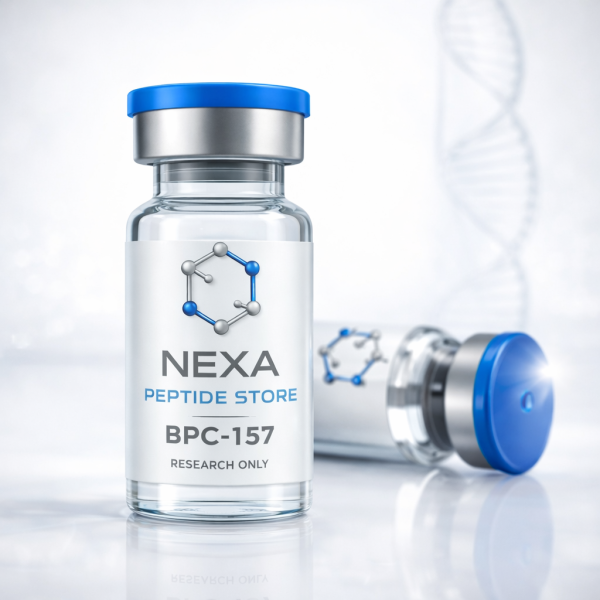
For laboratory and in-vitro research use only. BPC-157 is not a drug, is not approved or evaluated by the FDA for safety or efficacy, and is not sold, labeled, or intended for human or veterinary use, administration, or consumption. Every listing on this page describes a research chemical for qualified laboratory buyers — nothing here is instruction for personal use.
Ask any lab manager who’s ordered peptides from three different vendors in the same quarter: the compound is rarely the hard part. The paperwork is. A batch shows up with a COA that’s six months old, or formatted like it was generated in five minutes, or missing a mass spec trace entirely and now the run is on hold while someone emails a supplier that may or may not write back.
BPC-157 research has grown fast enough that sourcing hasn’t kept pace with it; the global peptide therapeutics market was valued at roughly $140.9 billion in 2025 and is projected to reach $294.6 billion by 2033 (Grand View Research), and a lot of that growth is being chased by vendors who treat documentation as optional. It shouldn’t be. Browse our full Research Peptides catalog to see how every batch we carry is verified before it ships.
What Is BPC-157?
BPC-157 — also written BPC 157, and referred to in older literature as PL-14736 or Bepecin — is a synthetic pentadecapeptide: a 15-amino-acid sequence (Gly-Glu-Pro-Pro-Pro-Gly-Lys-Pro-Ala-Asp-Asp-Ala-Gly-Leu-Val) modeled on a partial fragment identified in human gastric juice, which is where the “Body Protection Compound” name originates. The free-base form is registered under CAS 137525-51-0; the acetate salt commonly used in research settings carries CAS 1628202-19-6, with a molecular formula of C62H98N16O22 and a molecular weight near 1,419.5 g/mol for the acetate.
It is not an FDA-approved drug, not a dietary supplement, and not classified as a conventional food additive. It exists, procedurally, in a research-chemical category — which is precisely why sourcing controls and documentation carry more weight than they would for an off-the-shelf reagent.
What Current Research Says About BPC-157
The published record on BPC-157 is large in volume but narrow in origin. Roughly 200 PubMed-indexed studies on the compound list either Predrag Sikiric or Sven Seiwerth — researchers based at the University of Zagreb — as an author, and the overwhelming majority of that literature is preclinical: in-vitro assays and animal models, not controlled human trials (STAT News, February 2026).
Gastrointestinal and hepatic models
A substantial share of the preclinical literature focuses on gut and liver protection — models of alcohol-induced gastric injury, NSAID-induced ulceration, and carbon-tetrachloride-induced hepatotoxicity, where BPC-157 administration was associated with reduced tissue damage markers in treated animals (Kleczkowska et al., Pharmaceuticals, 2025).
Tissue and wound-repair models
BPC-157 has also been investigated in tendon, ligament, and cutaneous wound-healing models, with reported associations between compound exposure and outgrowth, cell migration, and neovascularization markers in animal tissue. A 2025 systematic review in orthopaedic sports medicine catalogued this body of animal and in-vitro work but explicitly noted the absence of comparable controlled human data. In tissue-repair research protocols, BPC-157 is sometimes examined alongside other characterized research peptides, such as TB-500 or GHK-Cu, to compare proposed mechanisms of action.
CNS and mechanistic research
A separate line of rodent studies has examined behavioral and neurochemical endpoints, including serotonin-pathway activity, alongside proposed mechanisms centered on nitric-oxide signaling and upregulation of antioxidant enzymes such as heme oxygenase. These remain mechanistic and animal-model findings, not clinical outcomes.
Human data: still the exception, not the rule
Human-subject data on BPC-157 is genuinely scarce. The one registered human trial — a 2015–2016 Phase I study under the name Bepecin, enrolling 42 healthy volunteers — was discontinued, and its data was withdrawn from public registries before external peer review (STAT News; ClinicalTrials.gov registry history). A small, more recent pilot study examining intravenous administration safety has since appeared in the literature, but it does not change the underlying picture: the evidence base for BPC-157 is a preclinical one, and researchers designing new protocols should treat it that way rather than extrapolating animal-model results onto human physiology.
Where it stands regulatory
BPC-157 has not been approved by the FDA for any indication. In 2023, the FDA placed it on its list of substances presenting “significant safety risks,” a determination that bars compounding pharmacies from using it in compounded preparations. The World Anti-Doping Agency added BPC-157 to its Prohibited List (category S0, non-approved substances) in 2022, and it also appears on the U.S. Department of Defense’s Prohibited Dietary Supplement Ingredients List (OPSS.org). Separately, in September 2025 the FDA issued a wave of warning letters to peptide sellers — BPC-157 vendors specifically among them — for advertising that marketed “research use only” products for human administration. The agency’s position, stated plainly in its warning letters, is that an RUO label does not exempt a product from drug regulation if the surrounding marketing shows an intent for human use. It’s a useful line for any lab-supply buyer to know, and it’s the reason this page describes what has been studied in preclinical models rather than what the compound will do for a person.
Purity, Certificates of Analysis, and Testing Standards
A Certificate of Analysis is supposed to answer one question: is the vial what the label says it is. In practice, COAs across the research-peptide market vary wildly — some are batch-specific and instrument-verified, some are generic templates recycled across every SKU a vendor carries. For a compound like BPC-157, where the published research this page cites was conducted on precisely characterized material, using an uncharacterized substitute defeats the point of running the protocol at all.
A COA worth trusting should show, at minimum: the specific batch or lot number matching the vial in hand, HPLC-determined purity (reported, not assumed), mass spectrometry confirming the correct molecular weight, and the testing date and issuing lab. If a vendor can’t produce that per batch, on request, before purchase, that’s the answer to “should I buy from them.” Our own Certificate of Analysis and lab-testing standards page walks through exactly what we test for and how to read the results.
How NexaPeptideLabs Sources and Verifies BPC-157
NexaPeptideLabs orders BPC-157 in defined production batches and requires independent third-party lab verification — HPLC purity analysis and mass spectrometry confirmation — before a batch is released for sale. Each batch’s COA is tied to its specific lot number, not pooled across production runs, and is made available to research buyers at checkout rather than on request only. That standard exists because the alternative — buying research material with no verifiable purity data — makes any resulting dataset suspect before the first assay even runs.
BPC-157 is for sale to qualified research buyers as a lyophilized (freeze-dried) powder intended solely for laboratory and in-vitro applications. Purchasing requires acknowledgment that the material is for research use only and will not be used for human or animal administration, consistent with our research-use policy.
Want the deeper research context before you order? Our BPC-157 research guide breaks down what the preclinical literature actually shows, where the human-data gaps are, and why COA verification matters as much as the compound itself.
Storage and Handling for Laboratory Use
Lyophilized BPC-157 should be stored at −20°C, protected from light and moisture, in the original sealed container. Under these conditions, unopened lyophilized peptide is generally stable for the manufacturer’s stated shelf life; once a vial has been opened or reconstituted for laboratory assay purposes, standard peptide-handling practice is to minimize freeze-thaw cycles, aliquot the reconstituted material, and store aliquots at the temperature specified on that batch’s COA or technical data sheet. Repeated warming to room temperature, or storage in frost-free freezers with fluctuating temperatures, will degrade peptide integrity faster than the stated shelf life would suggest. Researchers should follow the specific storage and stability guidance provided with each batch’s documentation, since stability data is lot-dependent.
Frequently Asked Questions
Is BPC-157 sold by NexaPeptideLabs for human use?
No. BPC-157 is sold strictly for laboratory and in-vitro research use. It is not a drug, is not for human or veterinary use, administration, or consumption, and has not been evaluated by the FDA for safety or efficacy.
What is BPC-157 studied for in current research?
Published preclinical literature has investigated BPC-157 in animal and in-vitro models related to gastrointestinal and hepatic protection, tendon and wound-tissue repair, and CNS/neurochemical activity. These are preclinical findings, not evidence of effects in humans.
Is it legal to purchase BPC-157 for research purposes?
BPC-157 can currently be purchased as a research chemical in the United States when sold and used strictly for laboratory/in-vitro purposes, but it is not an approved drug or dietary supplement, and the FDA has taken enforcement action against sellers whose marketing implies human use despite RUO labeling. Buyers are responsible for complying with their institution’s and jurisdiction’s research-chemical regulations.
Is BPC-157 the same as an FDA-approved pharmaceutical?
No. Unlike an FDA-approved peptide drug (semaglutide, for example, which went through formal clinical trials and FDA review), BPC-157 has not completed that process. Its one registered human trial was discontinued and its data withdrawn before peer review, and the FDA has explicitly flagged it as carrying unresolved safety questions.
What does a Certificate of Analysis (COA) show, and why does it matter?
A COA documents a specific batch’s identity and purity — typically via HPLC purity analysis and mass spectrometry confirming molecular weight — tied to that lot’s number and test date. It’s the only way to verify that a vial actually contains what the label claims, at the purity claimed.
What purity level does NexaPeptideLabs test to?
Each BPC-157 batch is independently tested via HPLC and mass spectrometry before release, with results published on a batch-specific COA available at checkout.
How should BPC-157 be stored in a lab setting?
Lyophilized BPC-157 should be kept at −20°C, sealed, and protected from light and moisture. Reconstituted material should be aliquoted and stored per the specific batch’s technical data sheet to minimize freeze-thaw degradation.
What’s the difference between BPC-157 free base and BPC-157 acetate?
Free base BPC-157 is registered under CAS 137525-51-0; the acetate salt form commonly supplied for research is CAS 1628202-19-6, with a molecular formula of C62H98N16O22 and molecular weight of approximately 1,419.5 g/mol. Vendors should specify which form a given SKU contains.
Why do BPC-157 listings say “research use only”?
Because that is the compound’s actual regulatory status: it is not an approved drug, and the FDA has stated that RUO labeling does not exempt a product from drug regulation if a seller’s marketing indicates human-use intent. NexaPeptideLabs sells BPC-157 exclusively as a research chemical and requires buyers to acknowledge that use.
Is BPC-157 banned or restricted anywhere?
It appears on the World Anti-Doping Agency’s Prohibited List (added 2022, category S0) and on the U.S. Department of Defense’s Prohibited Dietary Supplement Ingredients List. The FDA has also barred its use in compounded drug preparations, citing unresolved safety risk.
How is BPC-157 shipped and handled?
Orders ship as sealed, lyophilized powder with cold-chain packaging appropriate to the batch’s stability requirements. Each shipment includes the batch’s COA and safety data sheet for laboratory recordkeeping.
Does NexaPeptideLabs provide dosing or administration guidance?
No. NexaPeptideLabs does not provide dosing, administration, reconstitution-for-use, or protocol guidance of any kind, because this material is not sold or intended for human or animal use. Researchers should refer to their own institution’s protocols and published literature for experimental design.


Zane (verified owner) –
The quality and presentation were excellent.
Tyler Campbell (verified owner) –
Packaging was secure and discreet. Great experience overall.
Avery (verified owner) –
Excellent packaging and timely delivery.