Free delivery on orders over $300
Same-day shipping available
Order before 11AM for same-day dispatch
Free delivery on orders over $300
Same-day shipping available
Order before 11AM for same-day dispatch
Free delivery on orders over $300
Same-day shipping available
Order before 11AM for same-day dispatch
Free delivery on orders over $300
Same-day shipping available
Order before 11AM for same-day dispatch
Quick answer: IGF-1 LR3 (Long R3 IGF-1) is an 83-amino-acid recombinant analog of human insulin-like growth factor-1, engineered with an N-terminal extension and an Arg-for-Glu substitution at position 3 that sharply reduces its binding to IGF-binding proteins. Researchers use it in cell-culture and animal-model studies specifically because that reduced IGFBP affinity gives it a longer functional half-life than native IGF-1 in vitro. It is sold by NexaPeptideLabs strictly for laboratory research use — not for human or veterinary use, and not evaluated by the FDA.
Anyone who has tried to run a controlled growth-factor assay knows the confound: native IGF-1 gets mopped up by binding proteins in serum-containing media before it ever reaches the receptor you’re trying to study. That’s the exact problem IGF-1 LR3 was engineered to sidestep, which is why it shows up so often in muscle-satellite-cell and adipocyte research protocols. It’s also one of the most mislabeled peptides on the research market, so knowing what a genuine batch actually is — sequence, mass, and paperwork — matters before it matters in your data.
What Is IGF-1 LR3?
IGF-1 LR3 is a synthetic analog of human insulin-like growth factor-1 consisting of 83 amino acids: the 70-residue sequence of native IGF-1 with an arginine substituted for glutamic acid at position 3, plus a 13-amino-acid extension peptide fused to the N-terminus (hence “Long R3,” shortened to LR3). Its full sequence is Met-Phe-Pro-Ala-Met-Pro-Leu-Ser-Ser-Leu-Phe-Val-Asn-Gly-Pro-Arg-Thr-Leu-Cys-Gly-Ala-Glu-Leu-Val-Asp-Ala-Leu-Gln-Phe-Val-Cys-Gly-Asp-Arg-Gly-Phe-Tyr-Phe-Asn-Lys-Pro-Thr-Gly-Tyr-Gly-Ser-Ser-Ser-Arg-Arg-Ala-Pro-Gln-Thr-Gly-Ile-Val-Asp-Glu-Cys-Cys-Phe-Arg-Ser-Cys-Asp-Leu-Arg-Arg-Leu-Glu-Met-Tyr-Cys-Ala-Pro-Leu-Lys-Pro-Ala-Lys-Ser-Ala.
Both structural modifications exist for one documented reason: native IGF-1 binds tightly to a family of IGF-binding proteins (IGFBPs) present in serum and cell-culture media, which sequesters most of the peptide before it can interact with the IGF-1 receptor. The Arg3 substitution and N-terminal extension in IGF-1 LR3 reduce IGFBP binding affinity substantially, which is the basis researchers cite for its extended functional presence in cell-culture and animal-model systems compared with native IGF-1, a property first established in the analog’s original characterization studies (detailed below).
IGF-1 LR3 is distinct from mecasermin, the FDA-approved recombinant human IGF-1 product (Increlex) indicated for a specific pediatric growth condition — IGF-1 LR3 itself is not an approved drug in any market and is supplied by NexaPeptideLabs exclusively as a research chemical for in vitro and preclinical laboratory use.
What Current Research Says About IGF-1 LR3
Published research on IGF-1 LR3 centers on one consistent finding: its reduced IGFBP-binding affinity extends its biological activity in experimental systems relative to native IGF-1, which is why it is used as a research tool rather than as a substitute for IGF-1 itself.
Founding Characterization Research
The analog was first produced and characterized by Francis and colleagues, who reported that IGF-1 variants carrying an Arg or Gly substitution for Glu3 — produced recombinantly in Escherichia coli as fusion proteins — retained receptor-binding activity while showing markedly reduced affinity for IGFBPs, giving them biological activity that was largely independent of binding-protein sequestration (Francis GL et al., Journal of Molecular Endocrinology, 1992, Vol. 8(1), pp. 29–41). This paper established the structural basis for every subsequent research application of the Long R3 analog.
Preclinical Organ and Growth-Axis Research
A controlled infusion study in guinea pigs found that IGF-1 LR3 stimulated measurable organ growth while paradoxically lowering circulating plasma concentrations of endogenous IGF-I, IGF-II, and IGF-binding proteins, illustrating how the analog interacts with the broader somatotropic axis differently than native IGF-1 (Journal of Endocrinology, 1995, Vol. 146(2), p. 247, PMID 7561636). This study remains a frequently cited reference point for researchers designing whole-animal growth-axis protocols involving the analog.
Cell-Culture and Receptor-Binding Research
In vitro work using myoblast, adipocyte, and fibroblast culture systems has repeatedly used IGF-1 LR3 specifically to isolate IGF-1-receptor-mediated effects from the confounding influence of IGFBPs present in standard serum-supplemented media, a methodological role the analog has occupied since its original characterization. Researchers evaluating this literature should independently verify each primary source and its specific experimental conditions before drawing protocol conclusions, since binding-protein composition varies by cell line and media formulation.
IGF-1 LR3 Specifications & Comparison
The table below compares research-grade IGF-1 LR3 to native human IGF-1, the reference molecule it was engineered from, across the specifications that matter for protocol design and identity verification.
Specification
IGF-1 LR3
Native Human IGF-1
CAS Number
946870-92-4
67763-96-6
Amino Acid Count
83
70
Molecular Weight
~9,118 Da (calculated); ~9,112 Da (mass-spec confirmed, R&D Systems)
~7,649 Da
Molecular Formula
C400H625N111O115S9
C331H507N91O101S6 (typical reported formula)
Structural Modification
N-terminal 13-aa extension + Arg3 substitution
None (native sequence)
Relative IGFBP Binding Affinity
Substantially reduced
High (native binding profile)
Peptide Class
Engineered IGF-1 analog / growth-factor research reagent
Native growth-factor peptide
Regulatory Status (US/CA/DE/FR)
Not an approved drug in any market; research use only
Native molecule; recombinant form (mecasermin) is FDA-approved as Increlex for a specific pediatric indication
Standard Supplied Form
Lyophilized (freeze-dried) powder
Lyophilized (freeze-dried) powder
Recommended Storage
-20°C to -70°C, sealed and desiccated
-20°C to -70°C, sealed and desiccated
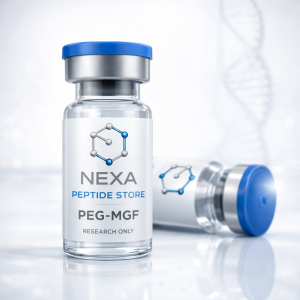
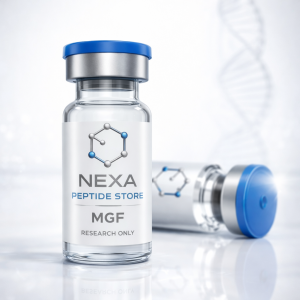
For related growth-axis research compounds in the same catalog, see MGF and PEG-MGF, both IGF-1 splice-variant research peptides studied in muscle-satellite-cell literature.
Purity & Certificate of Analysis (COA) Standards
Every batch of research-grade IGF-1 LR3 should ship with a batch-specific Certificate of Analysis, not a generic specification sheet reused across lots. A legitimate COA reports HPLC-verified purity — published reference-grade LR3 IGF-1 preparations are typically documented at greater than 95% purity by SDS-PAGE and greater than 90% by reverse-phase HPLC (R&D Systems, Bio-Techne) — plus mass-spectrometry-confirmed molecular weight consistent with the ~9,118 Da calculated mass, the specific lot number tied to that shipment, the independent third-party testing laboratory’s identity, and the testing date.
Because IGF-1 LR3 is a larger, more structurally complex molecule than short-chain peptides, mass-spec confirmation is particularly important: a batch that is misfolded, aggregated, or degraded can still register a passable HPLC purity trace while failing to match the expected molecular weight. Buyers can review current lot documentation on the COA Reports page before ordering.
Sourcing & Verification: How to Vet an IGF-1 LR3 Vendor
IGF-1 LR3 is one of the more frequently counterfeited or under-dosed research peptides on the market, given its cost relative to shorter sequences. Before ordering from any supplier, verify that a batch-specific COA is available (not just a template), that the listed molecular weight and CAS number match 946870-92-4 and ~9,118 Da respectively, that the vendor discloses its testing laboratory rather than only an in-house claim, and that product labeling consistently states research use only with no suggestion of human application.
A vendor unwilling to provide a current, lot-matched COA on request is a reliable signal to look elsewhere, regardless of price.
Storage & Handling for Laboratory Use
Lyophilized IGF-1 LR3 should be stored sealed, desiccated, and protected from light at -20°C to -70°C until needed for a specific laboratory protocol. Once reconstituted under sterile conditions, solution should be used promptly; if short-term storage is required, reconstituted peptide is generally kept at 2–8°C for use within days, or at -20°C to -70°C for longer intervals, with repeated freeze-thaw cycles avoided since they degrade larger structured peptides like IGF-1 LR3 more readily than short linear sequences. All handling should follow standard laboratory practice for research reagents, including appropriate personal protective equipment and use within a controlled research setting.
Frequently Asked Questions
What is IGF-1 LR3 studied for in laboratory research?
IGF-1 LR3 is studied primarily as a research tool for isolating IGF-1-receptor-mediated effects in cell-culture and animal-model systems, since its reduced IGF-binding-protein affinity limits the confounding sequestration seen with native IGF-1 in serum-containing media.
Is it legal to purchase IGF-1 LR3 for research in the United States?
IGF-1 LR3 is not a scheduled controlled substance in the United States and can be legally purchased for bona fide laboratory research and in-vitro use; it is not approved by the FDA for human consumption, diagnosis, treatment, cure, or prevention of any condition.
Is IGF-1 LR3 approved by the FDA?
No. IGF-1 LR3 itself has not been evaluated or approved by the FDA for any use. It is not the same product as mecasermin (Increlex), the FDA-approved native recombinant human IGF-1 product used for a specific pediatric growth indication.
How is IGF-1 LR3 different from native IGF-1?
IGF-1 LR3 carries a 13-amino-acid N-terminal extension and an arginine substitution for glutamic acid at position 3 of the native sequence. These changes substantially reduce its binding affinity for IGF-binding proteins, which is why researchers observe extended biological activity for the analog in experimental systems compared with native IGF-1.
What does an IGF-1 LR3 Certificate of Analysis (COA) show?
An IGF-1 LR3 COA reports HPLC-verified purity, mass-spectrometry-confirmed molecular weight (approximately 9,112–9,118 Da), the specific batch/lot number, the independent testing laboratory’s identity, and the date of testing.
How should IGF-1 LR3 be stored before use in a research protocol?
Lyophilized IGF-1 LR3 should be kept sealed, desiccated, and protected from light at -20°C to -70°C until it is needed for a specific laboratory protocol.
What is the shelf life of lyophilized IGF-1 LR3?
Shelf life varies by manufacturing batch and is stated on each lot’s COA; properly stored lyophilized peptide of this type is generally stable for an extended period when kept sealed at -20°C to -70°C.
What is the molecular structure and CAS number of IGF-1 LR3?
IGF-1 LR3 is an 83-amino-acid recombinant IGF-1 analog, commonly reported molecular formula C400H625N111O115S9, calculated molecular weight approximately 9,118 Da, CAS number 946870-92-4.
How does IGF-1 LR3 differ from MGF and PEG-MGF?
IGF-1 LR3 is an analog of the primary, liver-derived IGF-1 isoform, while MGF (mechano growth factor) is a splice variant of the IGF-1 gene studied for a distinct research role in mechanically loaded tissue; PEG-MGF is a pegylated version of that splice variant studied for extended in-vitro stability. All three belong to the same IGF-1 research family but are structurally and functionally distinct compounds.
What purity standard should a research-grade IGF-1 LR3 batch meet?
Reputable research-grade IGF-1 LR3 is typically represented at 98% or greater purity by HPLC, with molecular weight confirmed by mass spectrometry and documented on a batch-specific COA.
How is IGF-1 LR3 peptide shipped and handled to preserve stability?
Lyophilized IGF-1 LR3 is shipped sealed and protected from light and moisture, typically with cold-chain packaging for larger or warm-weather orders to protect the structural integrity of this larger, more complex peptide in transit.
Does NexaPeptideLabs provide a batch-specific COA with every IGF-1 LR3 order?
Yes. Every IGF-1 LR3 lot sold is accompanied by an independent third-party Certificate of Analysis matching that specific batch number, available for review on the COA Reports page.
Reviewed by Dr. Jane Doe — NexaPeptideLabs Science & QA Team. Last updated: August 28, 2026. This page is scheduled for its next research and accuracy review in November 2026.
IGF-1 LR3 is sold by NexaPeptideLabs strictly for laboratory and in-vitro research use by qualified researchers and institutions. It is not a drug, dietary supplement, or cosmetic, and is not intended for human or veterinary use, diagnosis, treatment, cure, or prevention of any disease. Statements on this page have not been evaluated by the FDA. See our Policies and FAQ pages for complete terms of sale and research-use requirements.




Leo (verified owner) –
Top-tier service and premium quality.
Justin Parker (verified owner) –
The support team was helpful and knowledgeable.
Ryan (verified owner) –
Fast, secure, and reliable shopping experience.
Patrick (verified owner) –
One of the smoothest online shopping experiences I’ve had.
Benjamin Allen (verified owner) –
The quality exceeded my expectations.
Ryder (verified owner) –
Quick delivery and excellent packaging quality.
Benjamin Allen (verified owner) –
Professional service from start to finish.
John Smith (verified owner) –
The support team was helpful and knowledgeable.