
Free delivery on orders over $300
Same-day shipping available
Order before 11AM for same-day dispatch
Free delivery on orders over $300
Same-day shipping available
Order before 11AM for same-day dispatch
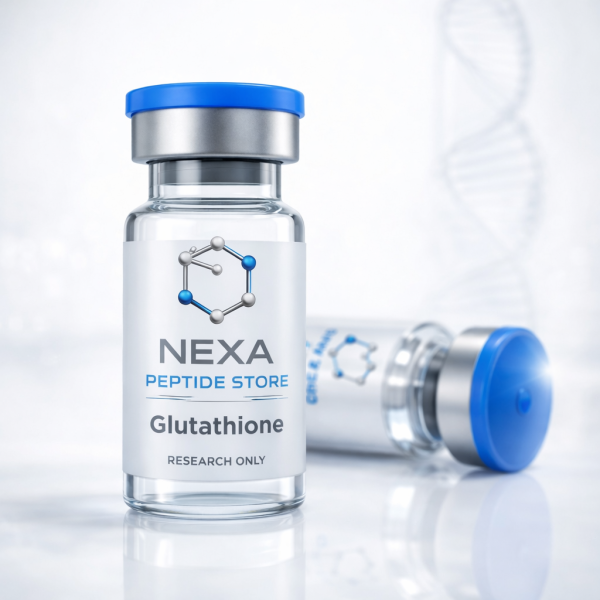
Glutathione
$50.00
Glutathione (GSH) is a naturally occurring tripeptide (γ-glutamate–cysteine–glycine, CAS 70-18-8) that functions as the primary intracellular antioxidant and redox buffer in human and animal cells. Researchers use it in cell-culture and biochemical studies to model oxidative stress, redox signaling, and detoxification pathways. NexaPeptideLabs supplies this research-grade compound strictly for laboratory use — not as a supplement, not for human or animal administration, and not evaluated by the FDA.
Glutathione is one of the most-searched, least-verified compounds in the research-reagent market: because it’s also sold as an oral supplement and a wellness-clinic infusion, these listings span everything from pharmaceutical-grade reagent to dietary-supplement powder repackaged into an unlabeled vial. That distinction isn’t cosmetic — in 2019 the FDA traced a cluster of hospitalizations directly to dietary-supplement-grade material that was never manufactured for sterile use. Knowing which grade you’re actually receiving, and how to verify it, matters before it ever reaches your bench.
What Is Glutathione?
Glutathione is a tripeptide built from three amino acids — glutamate, cysteine, and glycine — joined by an unusual gamma-peptide bond between glutamate’s side-chain carboxyl group and cysteine, followed by a standard peptide bond to glycine. Its molecular formula is C10H17N3O6S, with a molecular weight of 307.32 g/mol and CAS number 70-18-8 for the reduced form (GSH).
The molecule exists in two interconverting states: reduced (GSH), the active antioxidant form, and oxidized (GSSG), formed when GSH neutralizes reactive oxygen species. The ratio of GSH to GSSG inside a cell is one of the most widely used biochemical markers of oxidative stress in laboratory research. Glutathione is synthesized endogenously in two ATP-dependent enzymatic steps — glutamate-cysteine ligase followed by glutathione synthetase — primarily in the liver, and orally ingested material is largely broken down by digestive proteases before absorption, which is why research use of the compound centers on direct cell-culture and biochemical applications rather than oral-dosing models.
What Current Research Says About Glutathione
Published research on this compound centers on its role as the cell’s principal thiol-based redox buffer, the factors that raise or lower its intracellular concentration, and — more recently — documented risks tied to non-pharmaceutical-grade material entering sterile applications.
Redox Biology and Cellular Antioxidant Defense
A widely cited review in the Journal of Nutrition describes glutathione as the most abundant low-molecular-weight thiol in mammalian cells, detailing its two-step biosynthesis pathway and its central function in neutralizing reactive oxygen species, peroxides, and electrophilic toxins (Wu G, et al., Journal of Nutrition, 2004, 134(3), 489–492, PMID 14988435). This paper remains a standard reference point for glutathione’s biochemical role in redox research.
Nutrient and Precursor Support Research
A 2019 systematic review examined the clinical evidence behind dietary and nutrient strategies — including specific amino acids, vitamins, and phytonutrients — that influence intracellular glutathione status, concluding that several precursor nutrients can measurably affect its synthesis pathways in controlled studies (Minich DM & Brown BI, Nutrients, 2019, 11(9), 2073). Researchers designing this kind of pathway study frequently reference this review when selecting comparator compounds and controls.
Purity and Contamination Findings
In 2019 the FDA identified a direct safety failure tied to glutathione sourcing: patients receiving intravenous material experienced fever, chills, and hypotension after being infused with material later found to contain bacterial endotoxin at up to five times the safe limit (FDA, “FDA Highlights Concerns with Using Dietary Ingredient Glutathione to Compound Sterile Injectables,” June 7, 2019). The contaminated material had been manufactured and labeled only for use in dietary supplements, never for sterile compounding — a finding that underscores why grade, sourcing, and batch-specific testing are inseparable from any legitimate use of this compound.
Glutathione Specifications & Comparison
The table below compares research-grade reduced GSH to N-acetylcysteine (NAC), the cysteine-derived precursor most often used alongside it in redox research.
| Specification | Glutathione (GSH) | N-Acetylcysteine (NAC) |
|---|---|---|
| CAS Number | 70-18-8 | 616-91-1 |
| Molecular Formula | C10H17N3O6S | C5H9NO3S |
| Molecular Weight | 307.32 g/mol | 163.19 g/mol |
| Compound Class | Endogenous tripeptide antioxidant | Cysteine-derived glutathione precursor |
| Primary Research Role | Direct redox buffer / thiol donor | Substrate support for endogenous GSH synthesis |
| Oral Bioavailability | Low (degraded by digestive proteases) | Higher; commonly used to raise intracellular GSH indirectly |
| Regulatory Status | Dietary-supplement ingredient (GRAS); not FDA-approved as a drug; this product is not for human or animal use | FDA-approved drug ingredient (acetylcysteine) and separately marketed as a supplement ingredient |
| Standard Supplied Form | Lyophilized (freeze-dried) powder | Crystalline powder |
| Recommended Storage | -20°C, sealed, protected from light and moisture | Room temperature to -20°C, sealed, protected from moisture |
For related redox and longevity-research compounds in the same catalog, see NAD and SS-31, both studied in mitochondrial and oxidative-stress research contexts.
Purity & Certificate of Analysis (COA) Standards
Every batch of research-grade glutathione should ship with a batch-specific Certificate of Analysis, not a generic specification sheet. A legitimate COA reports HPLC-verified purity, mass-spectrometry-confirmed molecular weight consistent with 307.32 g/mol, the specific lot number, the independent testing laboratory’s identity, and the testing date. Given the FDA’s 2019 finding that dietary-supplement-grade material can carry bacterial endotoxin levels unsafe for sterile applications, a reputable COA for research-grade material should also report an endotoxin test result, not purity alone. Buyers can review current lot documentation on the COA Reports page before ordering.
Sourcing & Verification: How to Vet a Glutathione Vendor
Because glutathione is sold across dietary-supplement, cosmetic, and research channels simultaneously, vendor verification matters more here than for compounds with a single market. Before ordering from any supplier, verify that a batch-specific COA is available, that it reports both purity and endotoxin testing rather than purity alone, that the listed CAS number matches 70-18-8, and that product labeling consistently states research use only with no suggestion of human or animal application. A vendor unwilling to provide a current, lot-matched COA with endotoxin data on request is a reliable signal to look elsewhere.
Storage & Handling for Laboratory Use
Lyophilized glutathione should be stored sealed, desiccated, and protected from light at -20°C until needed for a specific laboratory protocol, since the reduced (GSH) form is prone to oxidation to GSSG on exposure to air and moisture. Once reconstituted under sterile conditions, solution should be used promptly, as the reduced material in solution continues to oxidize over time even under refrigeration. All handling should follow standard laboratory practice for research reagents, including appropriate personal protective equipment and use within a controlled research setting.
Sources & Further Reading
- Wu G, Fang YZ, Yang S, Lupton JR, Turner ND. “Glutathione metabolism and its implications for health.” Journal of Nutrition, 2004, 134(3), 489–492. PMID 14988435.
- Minich DM, Brown BI. “A Review of Dietary (Phyto)Nutrients for Glutathione Support.” Nutrients, 2019, 11(9), 2073.
- U.S. Food and Drug Administration. “FDA Highlights Concerns with Using Dietary Ingredient Glutathione to Compound Sterile Injectables.” June 7, 2019.
Frequently Asked Questions
What is glutathione studied for in laboratory research?
Glutathione is studied primarily as the model compound for cellular redox biology — researchers use it to measure oxidative stress (via the GSH/GSSG ratio), study detoxification pathways, and investigate thiol-based antioxidant mechanisms in cell culture and biochemical assays.
Is it legal to purchase glutathione for research in the United States?
Glutathione is not a scheduled controlled substance and can be legally purchased for bona fide laboratory research; research-grade material sold for laboratory use is not evaluated by the FDA for human consumption, diagnosis, treatment, cure, or prevention of any condition.
Is glutathione approved by the FDA as a drug?
No. Glutathione is recognized as a dietary-supplement ingredient (GRAS status) but is not FDA-approved as a drug product. The FDA has specifically warned that supplement-grade material is not manufactured or tested for sterile injectable use.
What does a glutathione Certificate of Analysis (COA) show?
A glutathione COA reports HPLC-verified purity, mass-spectrometry-confirmed molecular weight (307.32 g/mol), endotoxin test results, the specific batch/lot number, the independent testing laboratory’s identity, and the date of testing.
How should glutathione be stored before use in a research protocol?
Lyophilized material should be kept sealed, desiccated, and protected from light at -20°C until it is needed for a specific laboratory protocol, since the reduced form oxidizes on exposure to air.
What is the difference between reduced (GSH) and oxidized (GSSG) glutathione?
Reduced glutathione (GSH) is the active antioxidant form that donates electrons to neutralize reactive oxygen species; in doing so it becomes oxidized GSSG. The GSH-to-GSSG ratio is a standard laboratory marker of oxidative stress.
What is the molecular structure and CAS number of glutathione?
Glutathione is a tripeptide of glutamate, cysteine, and glycine, molecular formula C10H17N3O6S, molecular weight 307.32 g/mol, CAS number 70-18-8 for the reduced form.
How does glutathione differ from N-acetylcysteine (NAC)?
Glutathione is the antioxidant molecule itself, while NAC is a cysteine-derived precursor that supports the body’s own synthesis pathway rather than acting as a direct antioxidant. Researchers frequently study both compounds together to distinguish direct versus precursor-mediated redox effects.
Why did the FDA raise concerns about injectable glutathione specifically?
In 2019 the FDA found that dietary-supplement-grade material used to compound sterile injectables contained bacterial endotoxin at unsafe levels, resulting in patient hospitalizations. The material had been manufactured and labeled only for dietary-supplement use, not sterile administration.
What purity standard should a research-grade glutathione batch meet?
Reputable research-grade material is typically represented at 98% or greater purity by HPLC, with molecular weight confirmed by mass spectrometry, endotoxin levels within safe research limits, and all results documented on a batch-specific COA.
How is glutathione peptide shipped and handled to preserve stability?
Lyophilized material is shipped sealed and protected from light and moisture, since the reduced form is prone to oxidation when exposed to air or humidity during transit.
Does NexaPeptideLabs provide a batch-specific COA with every glutathione order?
Yes. Every glutathione lot sold is accompanied by an independent third-party Certificate of Analysis matching that specific batch number, available for review on the COA Reports page.
Reviewed by Dr. Jane Doe — NexaPeptideLabs Science & QA Team.
Last updated: August 28, 2026. This page is scheduled for its next research and accuracy review in November 2026.
Glutathione is sold by NexaPeptideLabs strictly for laboratory and in-vitro research use by qualified researchers and institutions. It is not a drug, dietary supplement, or cosmetic, and is not intended for human or veterinary use, diagnosis, treatment, cure, or prevention of any disease. Statements on this page have not been evaluated by the FDA. See our Policies and FAQ pages for complete terms of sale and research-use requirements.
Research background
- The full longevity research catalog
- Reducing quality risk when sourcing research peptides
- Batch documentation for this compound
Research use only. Not for human or animal consumption.
7 reviews for Glutathione
Only logged in customers who have purchased this product may leave a review.
Samuel (verified owner) –
Products arrived safely and exactly on schedule.
Ryan Young (verified owner) –
Fast, secure, and reliable shopping experience.
Nicholas Baker (verified owner) –
Very impressed with the consistency and reliability.
Leo (verified owner) –
Customer support answered all my questions quickly.
Matthew King (verified owner) –
The quality and presentation were excellent.
Edward (verified owner) –
Very impressed with the purity and professionalism.
Zohar (verified owner) –
Outstanding service and premium product quality.